Ector County
Moss Avenue Widening
From University Boulevard to April Street
Overview
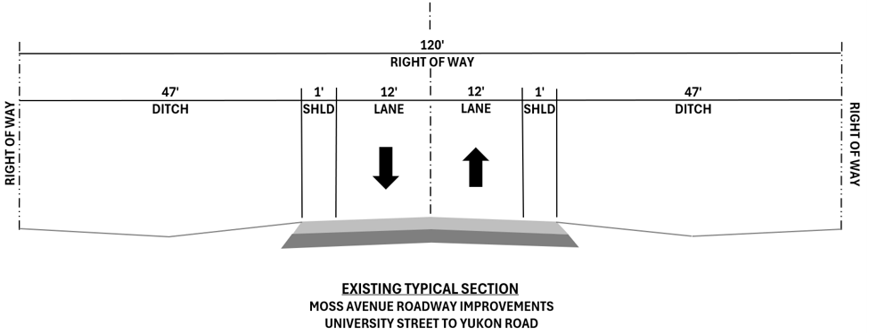
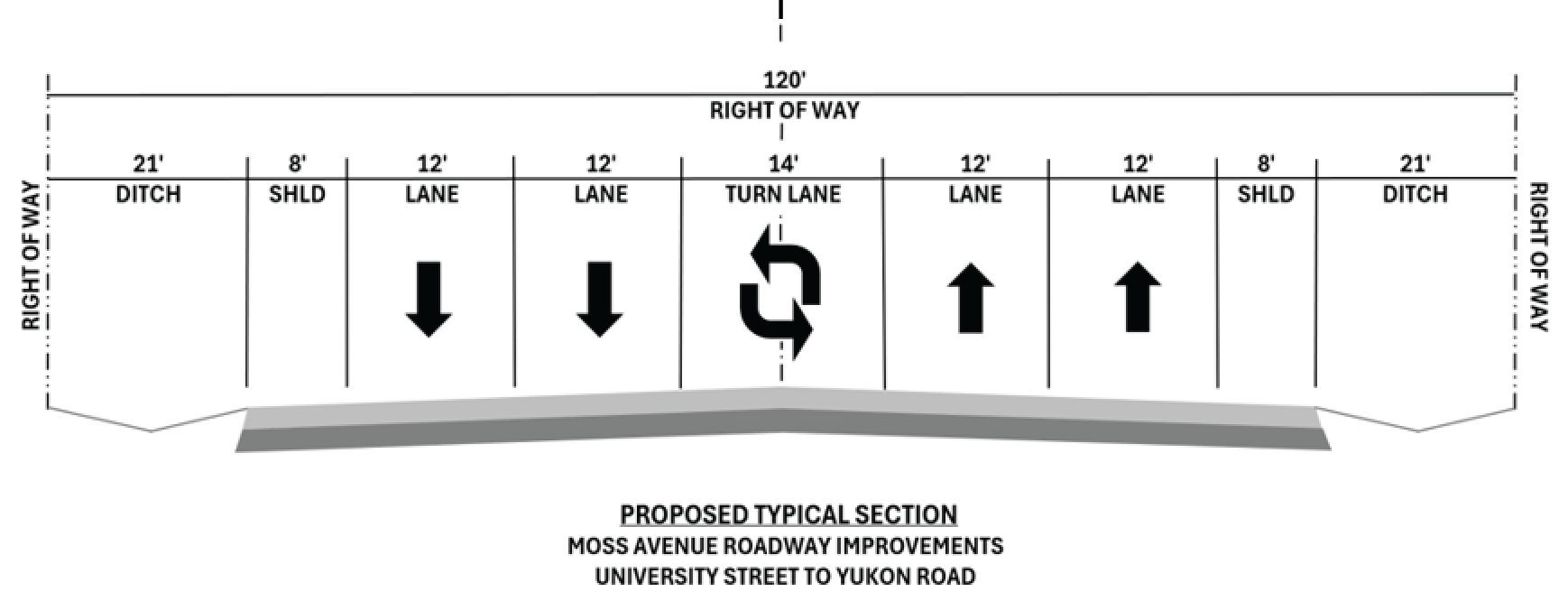
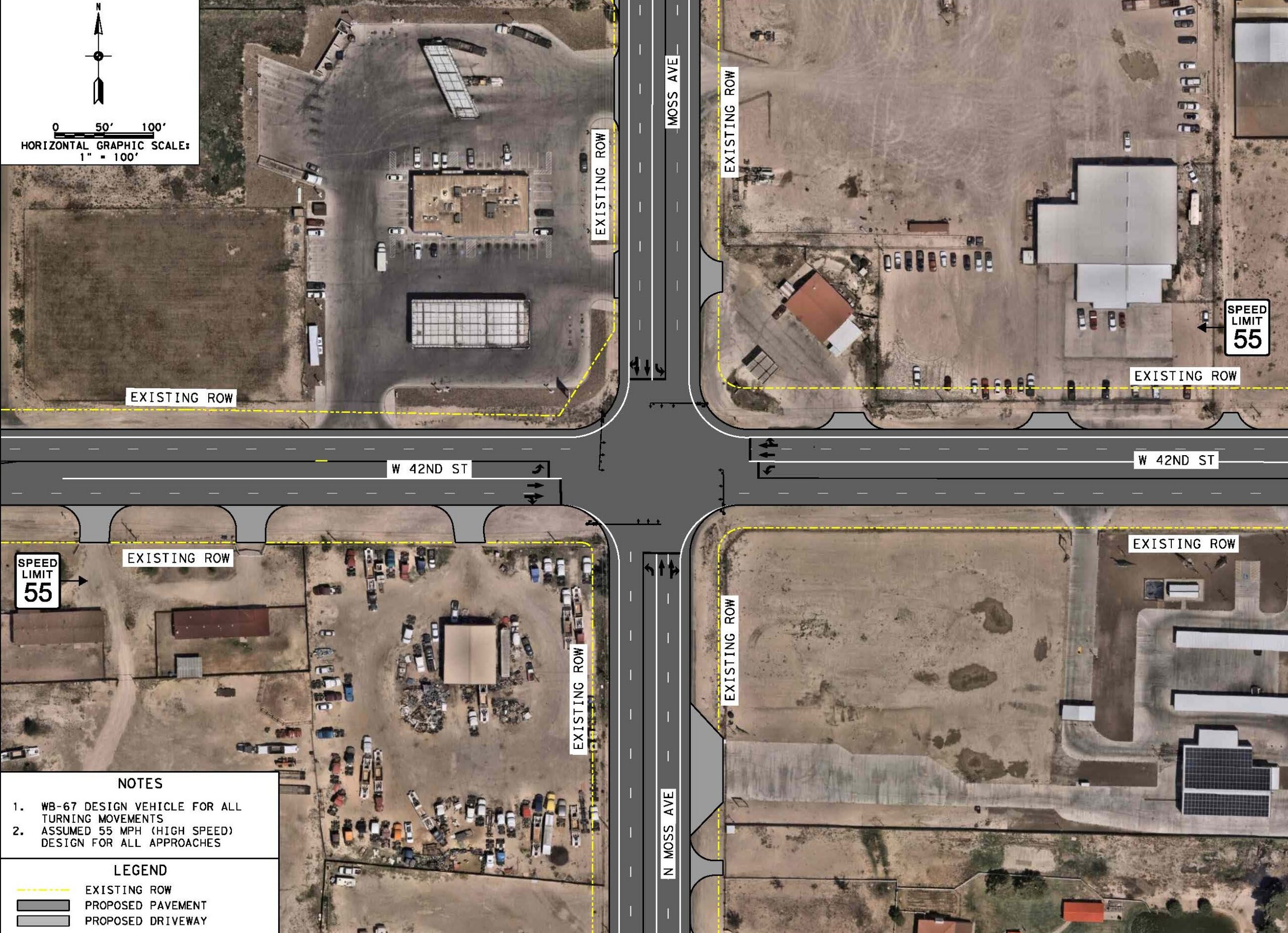
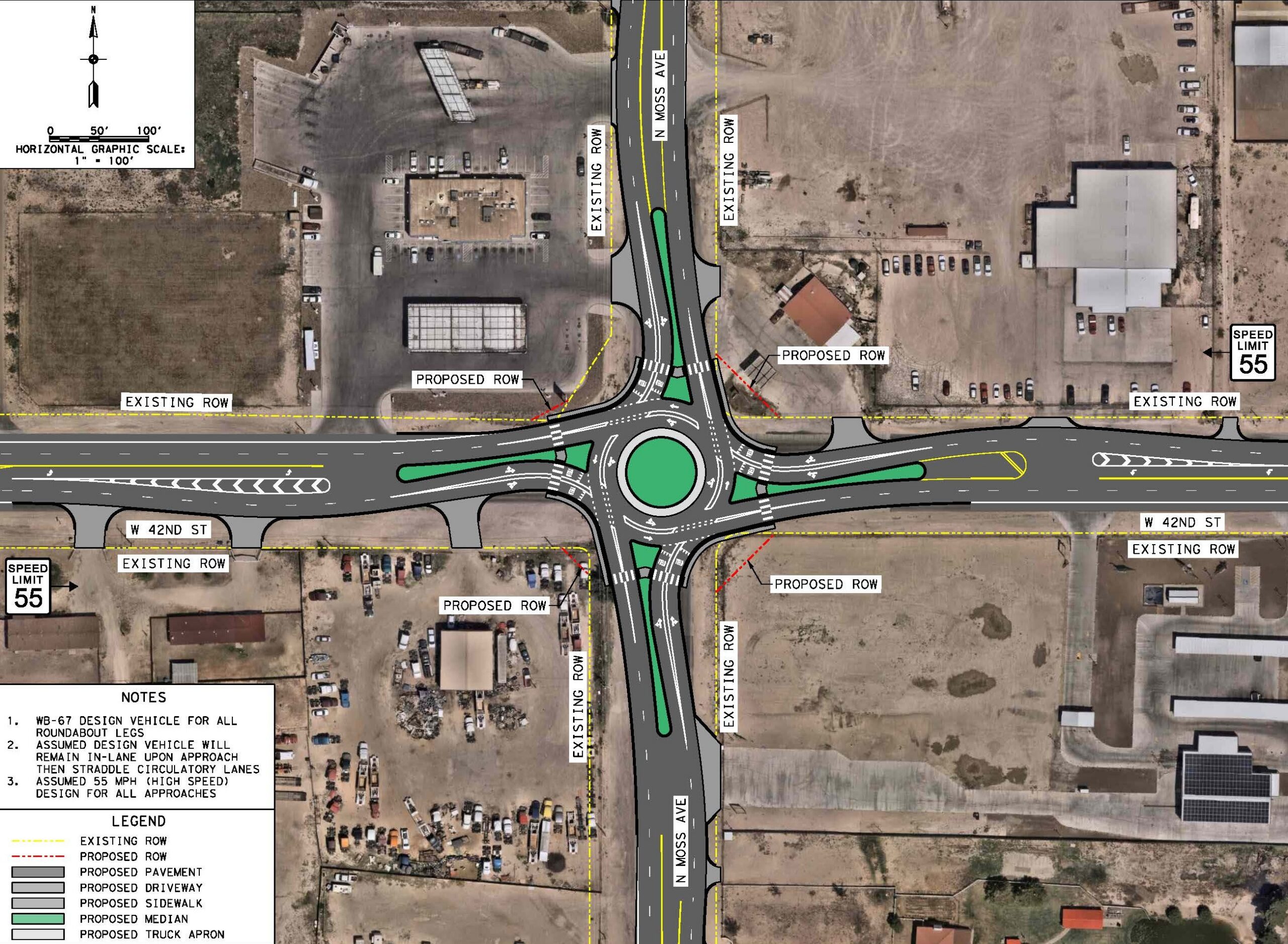
Ector County is planning improvements along approximately 1.5 miles of Moss Avenue from University Avenue to April Street, which includes widening Moss Avenue from a 2-lane roadway to a 5-lane roadway including improvements at 42nd Street and Moss Avenue intersection. Two intersection alternatives are being considered – a signalized intersection and a roundabout. The purpose of this public meeting is to help provide educational information on the advantages and disadvantages of signals and roundabouts.
PHASE 1: University Blvd to April Street
PHASE 2: April Street to Yukon Road
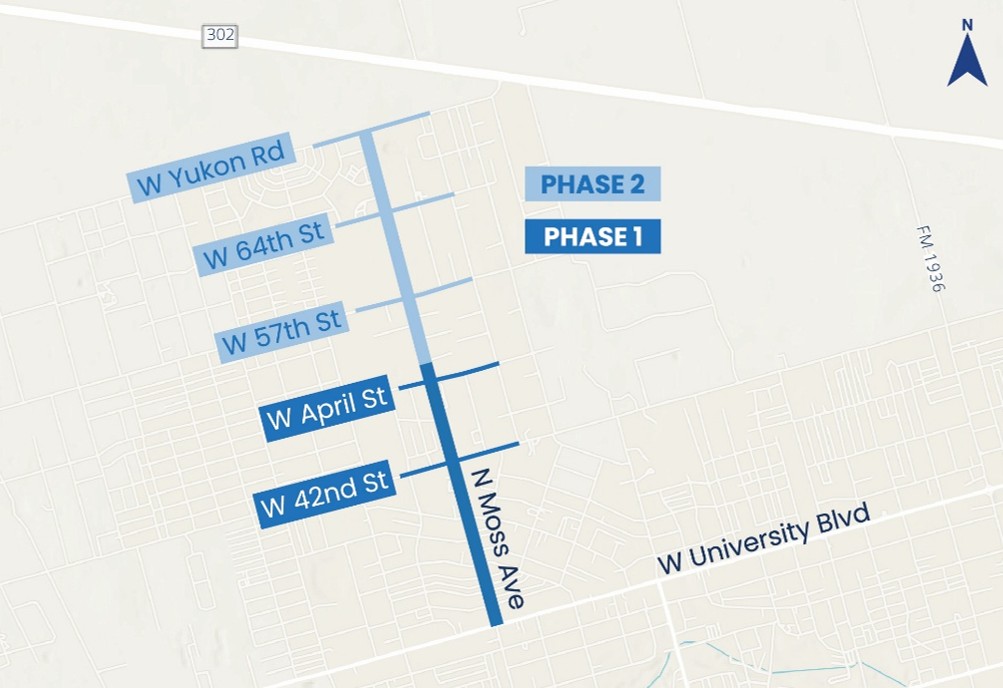
Proposed Improvements
Widen from 2-lanes to 5-lanes
Maintain and Improve Ditches
Drainage Analysis and Design
42nd Intersection Improvements
Widen from 2-lanes to 5-lanes
Drainage Analysis and Design
Maintain and Improve Ditches
42nd Intersection Improvements
Schedule
Want to learn more about the project? You are invited to participate in an in-person public meeting on October 29. The purpose of this public meeting is to help provide educational information on the advantages and disadvantages of signals and roundabouts.
The in-person meeting will be an open-house come-and-go- format. Participants will be able to view project displays, watch demonstrations, ask questions of project staff, and provide input. Information will be available in both English and Spanish. Input received in response to this public meeting will be considered as the project is further developed.
October 2026 – August 2027
Public Meeting #1
Thursday, October 29, 2026
7-9 p.m
Murry Fly Elementary School
11688 W. Westview Drive,
Odessa, Texas 79764
Note – after the meeting we can upload the presentation to the site if you would like and link here.
Public Meeting #2
December 2026
More information coming soon.
Engineering Design Plans
January – August 2027
Alternatives
42nd Street and Moss Avenue
Driver experience comparison
Signalized Intersection
- Cars drive through at full speed
- Drivers have little response time
- Unforgiving environment
- High severity crashes (T-bone/head-on)
- Drivers must watch several directions at once
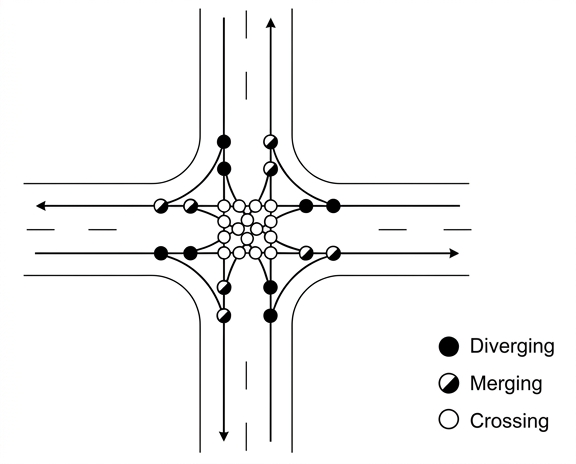
- 32 Conflict Points
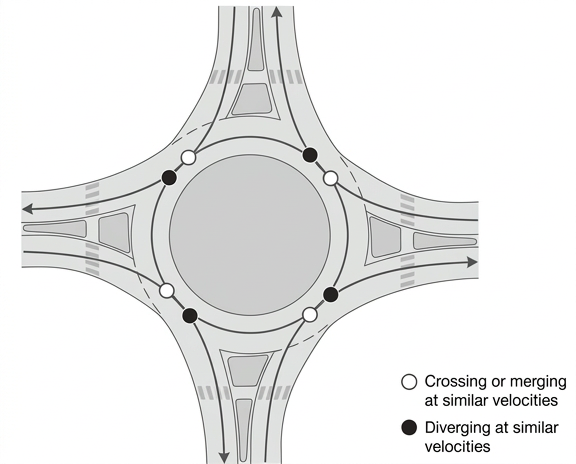
Roundabout
- Cars slow down to about 20-25 mph
- Situation changes more slowly…more reaction time
- Forgiving environment
- Low severity crashes (fender benders)
- Drivers only need to watch from one direction
- 8 Conflict Points
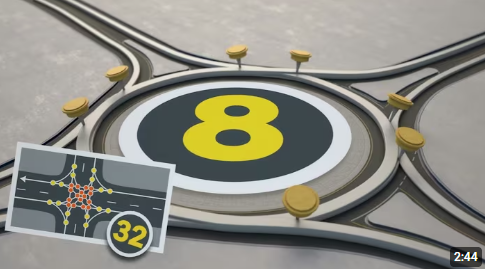
Video Demonstration Section
Frequently Asked Questions
A roundabout is a circular-shaped intersection designed to increase safety and reduce traffic congestion at an intersection.
No. Modern roundabouts started being implemented in the United Kingdom in the late 1960s. It took several decades before modern roundabouts began to be installed in the U.S. Today, there are more than 10,000 roundabouts built in the U.S. and many state highway departments, counties, and cities are implementing roundabout related programs to bolster their success in communities.
- Roundabouts are a relatively new type of intersection as compared to conventional intersection control types (traffic signals and stop signs).
- Many motorists that are not familiar with driving roundabouts can feel uneasy and concerned that other drivers may not follow the rules at a roundabout. Once motorists become familiar with safely driving through a roundabout, they will notice the improved traffic flow and feel at ease.
- Since roundabouts are new to our area, please expect a short adjustment period as motorists get used to driving them. Some drivers may stop at the yield sign or need a larger gap in traffic than others before they proceed to enter the roundabout – this reinforces the safety aspect of a roundabout. Drivers can take their time and enter when they feel it is safe to do so.
- Driving a roundabout takes practice for anyone. One benefit for seniors and inexperienced drivers is that roundabouts allow drivers to proceed at their own pace.
- If you, as a driver, do not feel comfortable entering the roundabout due to vehicles that are already circulating inside the roundabout, you can wait for an appropriate gap in traffic before entering and proceeding to your exit. Through practice and education, anyone can become comfortable driving through roundabouts.
Yes, roundabouts are safe for pedestrians. In a typical roundabout, pedestrians walk on sidewalks around the perimeter of the circulatory roadway. When pedestrians need to cross the roadway, they cross only one direction of traffic at a time. In addition, crossing distances are relatively short and traffic speeds are lower than at traditional intersections. The location of crosswalks at roundabouts are away from the main travel zone which provides motorists with more space and time to yield to pedestrians in the crosswalk.
- Bicyclists choosing to enter the roundabout on the roadway should obey the rules of the road as a vehicle and follow the flow of traffic. Bicyclists using the roadway should ride near the middle of the lane to remain visible to motorists.
- Another option is for bicyclists to dismount and walk their bike on the adjacent sidewalks (like pedestrians), or use the bike ramp and the shared use path where bike ramps and shared use paths are provided.
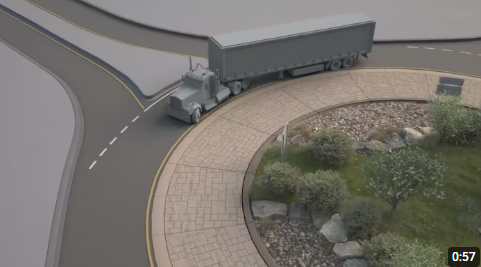
Keep a safe distance behind large vehicles, they are allowed to use both lanes. Roundabouts are carefully designed to accommodate all vehicles safely and effectively with large turning radii such as large trucks (semis), tractor-trailers, emergency vehicles and buses. Roundabouts provide an area between the circulatory roadway and the central landscaped island, known as a truck apron, over which the rear wheels of these vehicles can safely track. The truck apron is typically composed of a colored and textured concrete to make it visible for drivers and to discourage routine use by smaller vehicles.
- If you are already in the roundabout, continue driving to the next available exit, drive out of the roundabout and then pull over to the right side of the road and stop. This allows the emergency vehicle to safely pass.
- Do not enter a roundabout when an emergency vehicle is approaching. Instead, move to the right and stop so the emergency vehicle can safely pass. The key is to make sure you are not an obstruction to an emergency vehicle.
- First slow down, then look for wayfinding signs. These will help guide you to the exit you want. Check to make sure there are no pedestrians crossing. Wait for an appropriate gap in traffic before entering. If you do not feel comfortable entering the roundabout, you can wait until you feel safe entering. Once you enter the roundabout, stay in your lane. When it’s time to exit, use your right turn signal, stay within your lane and exit.
- Roundabouts are a relatively new type of intersection to the U.S. There are many people who will be using a roundabout for the first time. Since roundabouts are new to our area, please expect a short adjustment period as motorists get used to driving them.
When comparing roundabouts to traffic signals, roundabouts are favorable due to the reduction of injury and fatal crashes that occur. This is the reason why the Federal Highway Administration has encouraged public agencies (cities, counties, and state highway departments) to use roundabouts since 2008. Simply put, roundabouts help get our family, friends and neighbors home safe at night. Roundabouts may also result in enhanced operational performance meaning less delay for drivers, less maintenance cost than traditional traffic signals and provide aesthetic appeal to communities. A roundabout is typically the optimum intersection control solution for any intersection that is expected to accommodate less than 50,000 vehicles per day.
Roundabout sizes vary depending on traffic volumes, capacity needs, intersection location/context, and the largest anticipated vehicle at the intersection along with other factors. Most modern roundabouts will have a diameter less than 180ft with some roundabouts, such as mini-roundabouts, having a diameter as small as 60ft.
Roundabouts are designed to keep traffic flowing by dispersing traffic across the roadway network instead of platooning traffic as traffic signals do. Although there are several dozen roundabouts in the U.S. that operate with greater than 50,000 vehicles per day, most intersections with a significant amount of traffic volume will be better accommodated by traffic signals due to the need for more than two lanes.
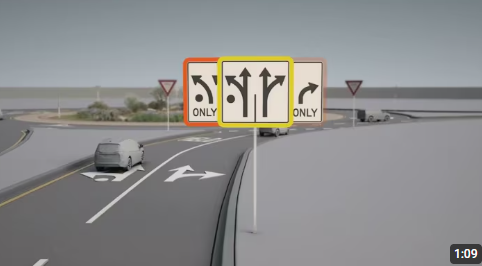
There are guide signs and pavement markings located prior to the entrance to multilane roundabouts that indicate the appropriate lane for your desired direction of travel. While some lane configurations may change from one roundabout to another, typical driving rules apply:
- If you want to make a u-turn, left-turn, or continue through the intersection you should approach and enter the roundabout in the left (inner) lane
- If you want to make a through movement or right-turn you should approach and enter the roundabout in the right (outer) lane
Look for the white and black regulatory signs while approaching a roundabout that provide the lane assignment for the intersection.
- Both vehicles have the right-of-way since there are two lanes within the roundabout.
- Remember, yield to all traffic that is circulating inside the roundabout that conflicts with your entering movement and enter the roundabout only when there is a safe gap in traffic.
- If you are approaching a roundabout at the same time as a semi-truck or other large vehicle, always yield and give way to the larger vehicle. Large trucks are legally allowed to occupy and overtake both lanes of a two-lane roundabout due to their size and turning radius. As they enter, circulate, and exit the roundabout, they may lose sight of adjacent vehicles. To stay safe, position your vehicle where you can see either the driver’s side or passenger side mirror of the truck. Never enter or remain in a truck’s blind spot while in the roundabout.
Please find additional information on the Texas Department of Transportation Innovative Intersections website.